Managing the balance between structured school terms and vacation periods is a fundamental aspect of family organisation in Singapore. Every year, the Ministry of Education outlines a specific schedule that splits the academic calendar into four distinct terms, interspersed with vital vacation intervals. Gaining a comprehensive understanding of each school holiday allows parents to coordinate their work schedules, organise meaningful family activities, and ensure children have adequate time to rest and recover.
These scheduled breaks offer students a necessary intermission from the intellectual demands of daily classroom learning and homework. When families align their personal plans with the official calendar, they can avoid the stress of last-minute bookings and ensure that vacations do not clash with crucial school projects or national assessments. Planning ahead transforms these term breaks from logistically challenging periods into seamless, enriching experiences for the entire household.
A Detailed Breakdown of the Official School Holidays
The annual structure established by educational authorities provides a predictable rhythm for students from primary schools all the way through to junior colleges. By understanding the timing and duration of the moe school holidays, families can systematically approach their planning for both short term-breaks and extended vacation periods.
Short Inter-Term Breaks
The academic year features two shorter vacation periods that take place between the first and second terms, as well as between the third and fourth terms. The March vacation spans a single week, typically offering a brief nine-day respite including weekends to help students catch their breath after the initial academic push of the year. Similarly, the September vacation offers another one-week window that splits the second semester, serving as a critical resting point before students enter the final revision and examination season of Term Four.
The Extended Mid-Year and Year-End Vacations
The longer holiday blocks are strategically placed at the mid-year point and the conclusion of the academic school year. The June vacation lasts for four full weeks, providing a substantial mid-year block that allows students to disconnect completely from school routines and engage in deeper personal pursuits. The final year-end vacation block begins in late November and covers the entirety of December, representing the longest vacation period of the year and offering students a massive window to transition smoothly into their next academic tier.
Understanding Creative and Meaningful Vacation Opportunities
When the term breaks finally arrive, the most common dilemma facing modern households revolves around what to do during school holidays to maximise time effectively. Striking a healthy balance between absolute relaxation, creative play, and continuous intellectual development ensures that children return to school feeling completely revitalised.
Rather than allowing vacation days to become passive periods dominated entirely by excessive television viewing or digital screens, parents can encourage a varied routine that stimulates both the body and the mind.
Engaging in Experiential Outdoor Activities
Taking the opportunity to visit the extensive network of green spaces, nature reserves, and thematic parks across Singapore provides children with vital physical exercise and a healthy connection to nature. Immersing young minds in natural environments does not merely burn off excess physical energy, but rather it acts as a powerful catalyst for cognitive development and sensory awareness. When children climb, run, and observe wildlife in places like the Sungei Buloh Wetland Reserve or the MacRitchie Reservoir, they develop spatial intelligence, physical coordination, and a deep appreciation for biological sciences that simple classroom lectures can never replicate.
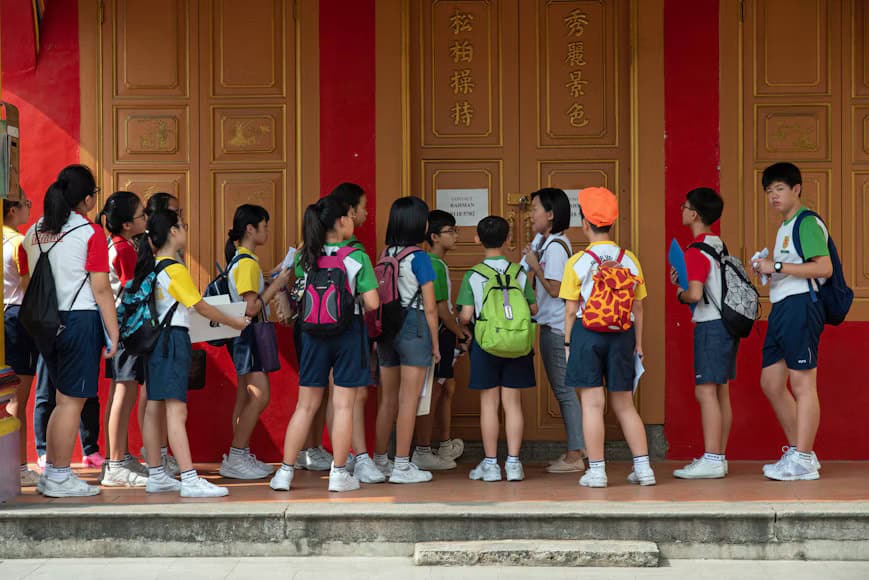
Furthermore, outdoor experiences can easily be integrated with history and cultural studies to create rich, multi-dimensional learning journeys. Visiting local heritage trails, historical fortresses, or interactive botanical exhibits transforms a standard day off into a lively, hands-on educational excursion where children gather information contextually. This active style of learning encourages independent observation and trains children to analyze the world around them, helping them form real-world connections to the geography and history topics covered in their school textbooks.
Fostering Creative Expression and Practical Skills
Vacation periods offer the ideal blank slate for children to discover personal hobbies and artistic talents that they might not have the time to cultivate during busy school terms. Enrolling young learners in specialized short-term workshops, such as culinary classes, pottery making, or theatrical expression, provides a fantastic outlet for emotional release and self-discovery. These creative arenas challenge children to think outside traditional academic boundaries, teaching them how to turn abstract ideas into tangible physical creations while simultaneously building immense personal self-esteem.
In addition to artistic pursuits, the holidays represent a prime opportunity to introduce modern, future-ready practical skills like introductory coding, robotics building, or financial literacy basics. Engaging with technology and logic driven projects during a low-stress vacation block allows students to cultivate critical thinking, problem-solving capacities, and computational logic without the pressure of scoring grades. These structured yet playful activities train young minds to view mistakes as natural iterations in the learning process, which directly reinforces their overall academic resilience and prepares them for an increasingly digital future.
Transitioning from Schedule Tracking to Purposeful Planning
Keeping a watchful eye on the calendar ensures that no critical dates are missed, but the true value of a school break lies in how effectively downtime is structured. Transitioning smoothly into a vacation routine requires a clear strategy that accommodates rest while gently maintaining a sense of daily structure. When children know what to expect from their holidays, they can transition back into their normal school routines with minimal friction and maximum enthusiasm.
To ensure your child remains completely prepared for the academic milestones ahead while fully enjoying their well-deserved time off, it helps to access a structured preparation framework. You can read a comprehensive, step-by-step roadmap designed to support your family through important academic transitions by reviewing the highly detailed PSLE Preparation Guide: How to Prepare Your Child for PSLE. This specific resource provides excellent structural checklists, revision timelines, and balanced study techniques that help families navigate critical school requirements smoothly.