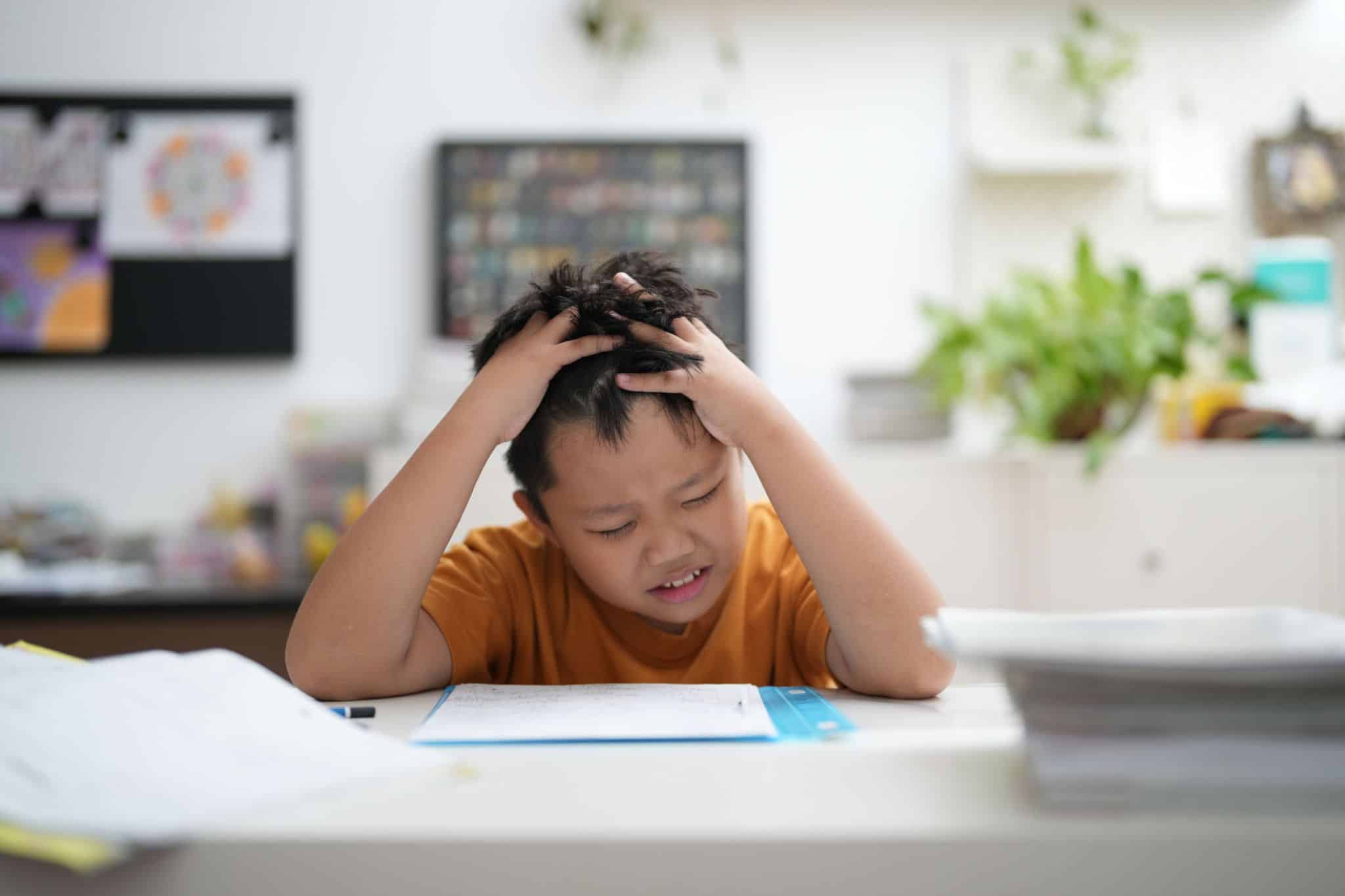
Every exam season, a familiar and frustrating phenomenon occurs in households across Singapore. A child spends weeks diligently revising, mastering past-year papers, and memorising complex formulas. Yet, the moment they sit down in the examination hall, their minds go completely blank. They stare at a question they answered perfectly the night before, but they cannot retrieve the information. This is not a reflection of their intelligence, nor is it a lack of preparation. It is the physiological reality of exam anxiety.
To help a child break this cycle, we have to look past standard study tips and understand the actual neuroscience of what happens inside a student’s brain when nervousness crosses the line into a psychological block.
When the Brain Mistakes a Test Paper for Danger
Exam anxiety is a specific type of performance anxiety where the intense pressure of an upcoming evaluation triggers debilitating emotional distress, negative self-talk, and acute physiological panic. While standard nerves can keep a student alert, true exam anxiety actively paralyzes their cognitive abilities.
To understand why a child freezes, we have to look at a small, almond-shaped structure deep inside the brain called the amygdala. According to research published by Harvard Medical School, the amygdala serves as the body’s emotional radar, responsible for detecting threats and triggering the survival instinct.
When a student experiences intense exam anxiety, the amygdala cannot differentiate between a physical threat, like a predator, and a psychological threat, like an upcoming O-Level or PSLE paper. It simply senses danger. Once triggered, it initiates a full fight or flight survival response, flooding the child’s body with stress hormones like cortisol and adrenaline.
This hormonal surge causes immediate physical changes. The heart rate increases by pumping blood into the muscles, hands become cold or sweaty, and breathing becomes shallow. Because the body is preparing for physical survival, it actively redirects energy away from non-essential systems.
A breakthrough neuroimaging study conducted by Stanford Medicine demonstrated that high anxiety levels send powerful, disruptive signals from the amygdala straight to the prefrontal cortex. This is the exact region of the brain responsible for logical reasoning, abstract thinking, and working memory retrieval. When the amygdala overrules this thinking centre, it physically locks up the pathways needed to recall information, resulting in a sudden mental block.
The Difference Between High Stress and Real Anxiety
| Characteristic | Academic Exam Stress | Severe Exam Anxiety |
| The Cause | Triggered by external factors like a heavy workload or a looming deadline. | Driven by internal fears, negative self-talk, and irrational worries about failure. |
| Mental Impact | The child feels overwhelmed but can still think logically and process information. | The child experiences a total cognitive block, making it impossible to focus or recall facts. |
| Duration | Dissipates naturally once the busy period or the specific paper is finished. | Persists long before the paper starts and lingers as a deep dread of future evaluations. |
| The Solution | Requires better time management, structured schedules, and study breaks. | Requires emotional regulation techniques, cognitive reframing, and calming tools. |
The Compounding Effect of the Illusion of Fluency
Another major contributor to exam-day panic is a psychological phenomenon known as the illusion of fluency. During revision weeks, many students spend hours passively re-reading highlighted notes, skimming through textbooks, or looking over already marked worksheets. Because the text looks familiar, the brain mistakes this recognition for actual mastery.
The danger arises the moment the student enters the examination hall and faces a blank question paper. Because passive reading does not train the brain to retrieve information from scratch, the student suddenly realizes they cannot generate the answer independently. This sudden realization catches them off guard, triggering an immediate spike in cortisol. The resulting panic rapidly initiates the amygdala response, turning a minor moment of forgetting into a full-scale mental block.
Rewiring the Flight or Fight Response in the Hall
Because exam anxiety is a physiological response, you cannot solve it by telling a child to calm down or by forcing them to do another practice paper. Instead, research highlighted by Stanford Lifestyle Medicine shows that students can use specific physical techniques to manually override their nervous system while sitting at their desk.
One of the most effective ways to do this is by changing their physical posture and breathing patterns. When panic begins to set in, a child’s breathing naturally becomes shallow and rapid, which signals the amygdala to release even more cortisol. By intentionally slowing their breath, inhaling deeply for four seconds and flexing the exhale slowly for six seconds, the child sends a physical signal to their brain that they are safe. This simple act lowers the heart rate and allows blood to flow back into the prefrontal cortex, unlocking their working memory.
Another vital shift involves how a child speaks to themselves in the moments leading up to the paper. An anxious mind is often filled with catastrophic predictions, such as believing that a single mistake will ruin their entire future. Teaching your child to notice these thoughts and gently counter them with objective facts can break the momentum of a panic spiral. Reminding themselves of the hours they have put into preparation changes their mental focus from avoiding a disaster to simply tackling the task at hand.
Moving Beyond the Pressure Culture
A calm mind is not a bonus feature of academic success; it is an absolute prerequisite for it. A student can possess flawless subject knowledge, but if their brain is locked in a survival state, they will never be able to demonstrate what they truly know on an exam script. Helping a child navigate this emotional landscape requires moving away from high-pressure environments and focusing on building quiet, resilient confidence.
Overcoming these mental blocks requires a learning environment that does more than just drill past-year papers. True academic excellence happens when comprehensive subject mastery is paired with teaching techniques that keep students feeling secure, capable, and in control of their progress. If you want to see how our targeted curriculum reduces exam panic and helps students perform at their absolute best, explore our options through our Primary and Secondary Tuition Programmes.
Source:
- Harvard Medical School. Fear in the Balance. https://hms.harvard.edu/news/fear-balance. June 5, 2026.
- Stanford Medicine. Stanford study finds stronger one-way fear signals in brains of anxious kids. https://med.stanford.edu/news/all-news/2020/04/stanford-study-finds-stronger-one-way-fear-signals-in-brains-of-.html. June 5, 2026.
- Stanford Lifestyle Medicine. How to Manage Anxiety for Improved Cognitive Function. https://lifestylemedicine.stanford.edu/manage-anxiety-brain-health/. June 5, 2026.